
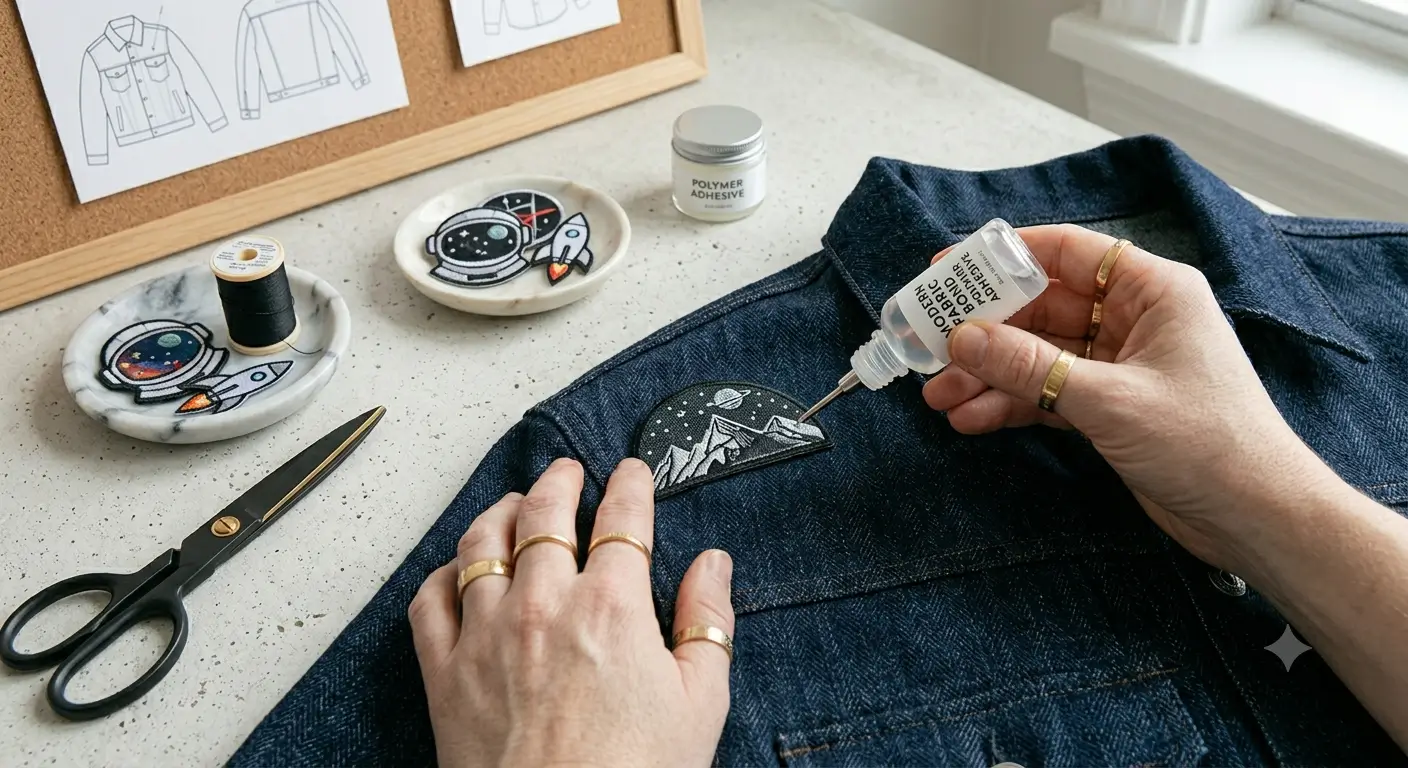
How to Fix a Peeling Iron-On Patch: Simple Solutions
Do not retire your great jacket, clothing, or bag simply because the adhesive is wearing off. Learn how to repair your peeling iron on patch by either applying heat to reactivate the adhesive using a dry iron or applying permanent fabric adhesive along the edge.
Simple Heat Fixes That Restore Patch Adhesion Quickly
Many people use iron-on patches to change clothes, repair fabrics, and improve their appearance on jackets, jeans, and bags.
They are popular because they are easy to apply and eye-catching. But as the days pass, you may experience the same issue with the patch as many others: It begins to pull from the edge of the fabric or to gradually drop.
Thus, this problem does not necessarily indicate that the patch is ruined. It can be easily fixed at home with the correct technique.
If you know the cause and proper treatment of these issues, you can help prolong the look of your patch and keep your clothing clean and fashionable.
What Causes Iron-On Patches To Start Peeling Over Time?
The heat-activated adhesive is used for iron-on patches.
If heat is applied properly, the glue will melt and adhere well to the fibres of the fabric. But when this process is not carried out correctly, or it deteriorates over time, peeling starts.
A frequent cause is improper heat application when installing.
If the temperature of the iron is not high enough or if the pressing time is too brief, the adhesive will not completely activate. The bond can also be broken over time by frequent washing, dryer heat, and constant friction.
How To Reattach A Peeling Patch Using Heat
The simplest method to repair a peeling patch is to heat the glue to make it work again. This technique is best used when only the edges are rising.
To achieve the optimum outcome:
- Lay the cloth on a hard, flat surface
- Smooth out wrinkles around the patch area
- Cover with a thin cotton cloth
- Use a hot iron on medium-high setting
- Maintain pressure for 20-40 seconds, but don’t move the iron
- Allow to cool thoroughly before handling.
Cooling is essential as it enables the adhesive to realign itself and adhesively join the fabric. A lot of people wear or move the garment early, which weakens the fix.
This is an easy heat reactivation technique that will be sufficient for most patches that are slightly peeling.
Fabric Glue Becomes The Better Solution
When using heat is not enough, fabric glue can be used to reinforce weaker spots. This can help with patches that are partially separated or the glue has deteriorated with age.
Gently peel off the raised edge and attach a bit of fabric glue under it. Press the patch fully in place and make sure that it lines up properly. Then, put a thick object on top to maintain pressure during the drying process. Wait a few hours for the fabric to dry before wearing or washing. This process requires additional strength and fixings in areas where heat is no longer sufficient.
Stitching Is The Most Secure Long-Term Solution
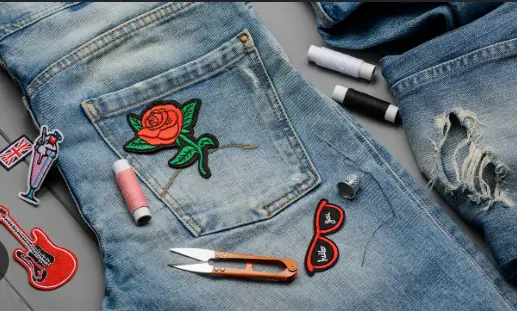
Stitching is the best method for a permanent solution. The iron-on adhesive is fine in the short term, but stitching will give lasting durability even after washing multiple times.
It is a technique that is often suggested by advanced iron-on patches maker, as it helps to hold the patches in place at the edges and also helps to reinforce the bond.
Stitching is particularly effective for applications such as jackets, backpacks, and uniforms that are subjected to constant friction and movement. Just a simple hand stitch around the border can help in a lot of ways to make it more durable and stop peeling in the future.
Why Heat Control Is The Key To A Strong Fix
Patches are repaired primarily with the help of heat. The adhesive will not reactivate if it is too cold. If it is too high, the fabric may burn or get damaged.
The easiest way is to set your iron to cotton and then apply pressure rather than flipping it around. Do not directly iron on the patch; otherwise, damage may occur.
Here are some major tips on how to control heat:
- Apply medium-high heat to most fabrics
- Apply even pressure rather than sliding the iron
- Heat on both sides of fabric if possible
- Do not steam while repairing
The correct heat control allows the adhesive to completely melt and re-bond to the fibres of the fabric.
Why Cooling Time Is As Important As Heat
Many people don’t pay attention to the cooling phase after they’ve heated. But this is as crucial as the ironing process.
The heated adhesive will be soft for a limited period of time. It needs to cool and harden to form a strong bond.
To achieve success:
- Hang up the clothes for 10-15 minutes
- Avoid bending or folding the area
- Do not wash for 24–48 hrs after repair
- Do not expose to moisture or heat
One of the primary causes patches begin to peel off again soon after repair is the lack of cooling time.
Preventing Future Damage With The Help Of Edge Reinforcement
Most patches start to come off from the borders. This occurs because of friction, motion, and repeated washing.
It is important to reinforce edges early, as it will reduce the possibility of total patch failure later. Small stitches or extra heat around corners can be used to reinforce the edges.
Fabric glue is also applied to edges to provide extra support for some people. The little things add up in the long run.
Proper edge care will keep the patch from slipping under normal use and load.
Common Mistakes That Lead To Patch Failure
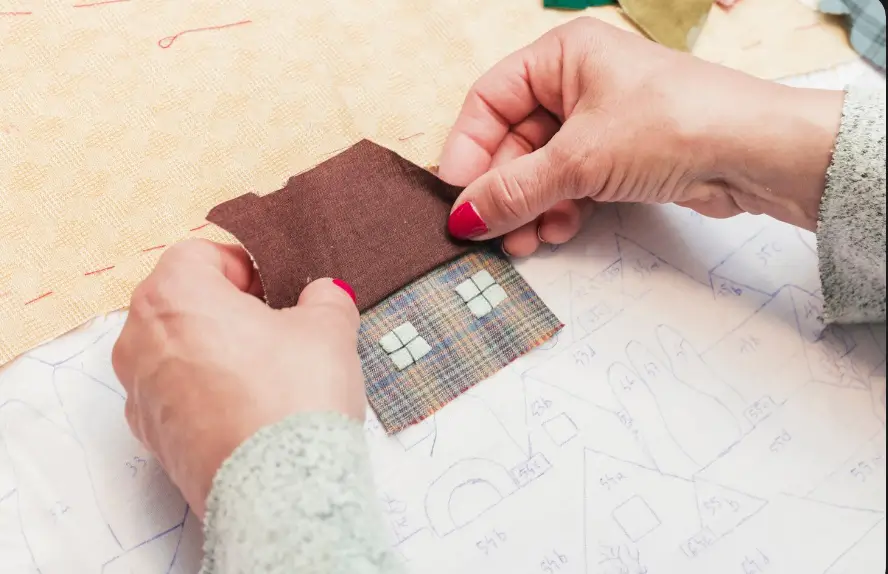
A lot of patch failures occur because of simple, avoidable mistakes. Knowing these will help you enhance the results.
Avoid:
- Using low heat when installing or repairing
- Clean clothes right after application of the patch
- Ironing too quickly or at too high a speed
- Not lifting small corners
- Applying patches on damp or unclean fabric
Practicing these habits can significantly enhance patch performance and avoid re-peeling problems.
FAQs
Why do iron-on patches come off when washed?
Iron-on patches come off because of heat loss, improper application, or repeated washing, causing the adhesive to break down over time.
Is it possible to repair the peeling area without removing it?
Yes, the peeling patches can be repaired with heat, fabric glue, or stitching, depending on the degree of damage and the fabric type.
How long should I press an iron on patch?
Usually, 20-40 seconds of medium-high heat and pressure are sufficient for the best results.
Do you need to stitch once you’ve attached a patch?
Sometimes it isn’t necessary to stitch, but it does make a big difference in durability and also helps to avoid future peeling.
Will all fabrics accept iron-on patches?
No, patches are better on cotton and denim, but if using synthetic fabrics, then they might require additional stitching or reinforcement for secure results.
Conclusion
It’s easy to fix a peeling iron-on patch if the proper steps are carefully followed.
Depending on the amount of damage, most of these problems can be addressed by appropriate heat application, fabric glue, or stitching reinforcement.
Its durability will rely on proper installation, cooling, and careful washing.
Early peeling is a common problem and can be easily avoided with careful handling.
Properly maintained and repurposed with proper repair techniques, your patches can last several years without the need for replacement or reapplication.

As a fashion designer at Iron On Patches UK, I help businesses and people create custom iron-on patches. I help them with what I know about designing patches and what materials to use. I also talk about how to apply patches to different things and what’s popular in the patch world. My goal with the Iron-On Patches UK blog is to help people make premium patches that show their unique identity and how these patches can be a part of their brand. The Iron-On Patches UK blog is here to make it easy for people to customize their patches.