
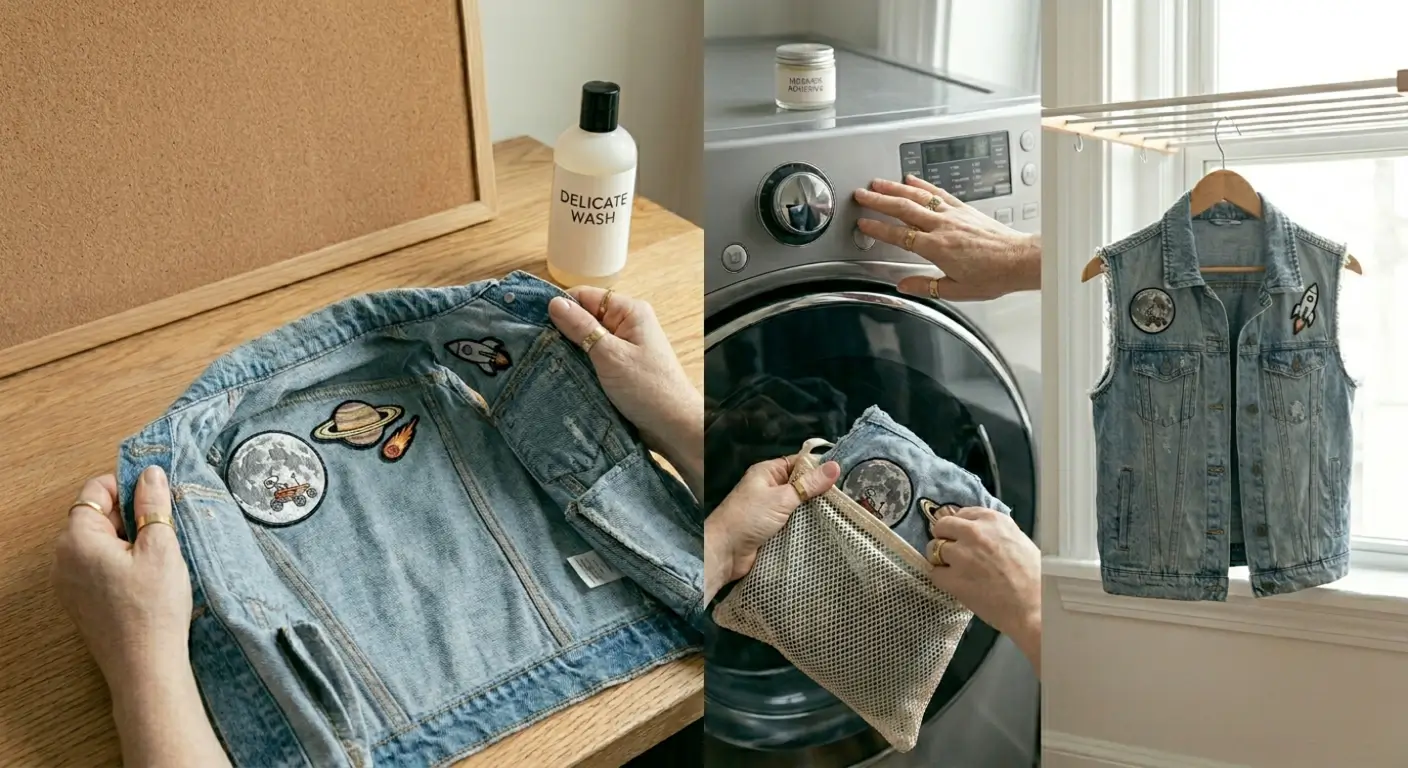
How to Wash Clothes with Iron-On Patches: Care Guide
Iron-on patches require a special inside-out, cold-water wash, as friction and heat can separate the patches from the clothes. Most people only learn this the hard way.
The patch that appears completely sealed comes out of the wash with a curled corner, or even tears off and ends up lost in the washing machine! But the good news is that you don’t need to go any extra miles once you know what to do differently.
The following are the steps for washing patched clothing in order to make the patch stay on for as long as the garment.
Why Regular Washing Is Hard on Iron-On Patches
Iron-on patches have a special adhesive on the reverse side that comes into effect when heated. The bond is stiff, but it isn’t permanent; over time, repeated exposure to heat, agitation and moisture slowly deteriorates it, like any adhesive.
A normal wash cycle on warm or hot water, combined with the tumbling motion of the machine, puts more stress on that bond than most people realise. It does not happen with a single wash. Peeling is caused by the constant stress on the bond over weeks and months.
Wait Before You Wash a Freshly Applied Patch
Do not wash the garment immediately after just ironing on a patch. The adhesive must cure completely and bond to the fabric, but if the fabric is washed too early, it can disrupt the curing process, preventing the adhesive from bonding.
Allow at least 24 hours (preferably 48 hours) to pass before the first wash. That alone will reduce the number of early patch failures more than anything else on this list because it allows the adhesive to perform its function correctly.
The Right Way to Wash a Patched Garment
Turn the Garment Inside Out First
If there is an iron-on patch on clothes, always put it inside out when washing. This prevents direct rubbing of the patch surface during the wash cycle, preventing the friction that could harm the patch.
It only takes two seconds, but it can make a difference in the longevity of the patch. Make it a habit every single time, not just occasionally when you remember.
Choose Cold Water and a Gentle Cycle
Cold water has much less effect on adhesive bonds than warm or hot water. Add to that a gentle or delicate cycle setting, as the tumbling and agitation can cause mechanical stress on the patch edges.
At the end of the cycle, lower the spin speed to decrease stress on the patch during extraction.
Skip the Fabric Softener and Go Easy on Detergent
Fabric softener adds a thin film of chemicals to fibres that can, over time, compromise the adhesive bond. This is a small effect per wash, but it adds up over many uses. The safer option for items that have an iron-on patch is a mild detergent with no softening agent added.
No special product is needed, but be sure to avoid anything with a lot of fragrance, more than a regular detergent would.
Drying Matters Just as Much as Washing
Air Dry Whenever You Can
The number one enemy of an iron-on patch, other than the wash, is heat. The patch is placed in the dryer and heated continuously for a long time, softening the adhesive and significantly increasing the likelihood of peeling it off over time.
Hanging the garment to air dry avoids this risk entirely and adds no real inconvenience beyond a slightly longer drying time. If you really care about an item such as a varsity jacket or a custom denim piece, or anything else that is made with bulk custom iron-on patches for a team or group order, air drying is worth the extra patience!
If You Must Use a Dryer, Use Low Heat
When air drying is not an option, to avoid damage to the garment, choose the lowest heat setting possible and remove the garment from the dryer immediately after the cycle, before any residual heat can remain. A shorter, cooler cycle is always better than a long, hot one for anything with an applied patch.
Even if the fabric can take the heat, don’t use it at high heat settings. The patch adhesive is the limiting factor here, not the garment fabric.
What to Do If a Patch Starts Lifting at the Edges
It’s easier to correct a lifting edge than a patch that has completely dropped. Fix any corners that start to curve as soon as you notice; do not wait for the next wash.
Typically, a quick fix is to reapply heat and firm pressure over the area that has lifted using a pressing cloth, applying the same low-temperature, firm-pressure technique used in the initial application. If you want a more permanent solution, a few hand-stitched patches around the edges will last through repeated reheats and washings for many more washes.
FAQs
Why did my iron-on patch peel despite following the directions?
Most often, it is because the adhesive was not fully activated when ironing, which is usually because the heat setting was not high enough or the iron was not pressed for long enough. If the problem persists, the patch is typically applied again with greater and longer pressure, which will usually cure it completely.
Which is safer, dry cleaning or washing at home?
Some types of adhesive may react differently to dry cleaning solvents than they do to water-based washing, and often not in a good way. If the clothing is dry-clean only, inform the cleaner of the patch so that the clothing can be treated accordingly.
Are sew-on patches washed in the same manner as iron-on patches?
Sew-on patches tend to last longer than adhesive patches, as stitching is more durable than adhesive in heat and agitation. They still get the advantages of cold water and inside-out washing, but they are much less prone to peeling or lifting with repeated washing.
Endnote
Washing laundry that features personalized adhesive details is simple, requiring minimal adjustments. Staying on top of small details like cold water, light cycles, and no hot-dryers ensures everything stays in pristine condition. These simple practices will help your personalized items look bright and stay securely in place for years to come.
When it comes to protecting your creative wardrobe, it’s a relatively simple process that’s well worth the extra patience to extend the life of your custom-made outfits. Follow the steps outlined above regularly, protect your investments, and enjoy your favourite custom apparel for life. This is a quick and considered laundry routine for your wardrobe.

As a fashion designer at Iron On Patches UK, I help businesses and people create custom iron-on patches. I help them with what I know about designing patches and what materials to use. I also talk about how to apply patches to different things and what’s popular in the patch world. My goal with the Iron-On Patches UK blog is to help people make premium patches that show their unique identity and how these patches can be a part of their brand. The Iron-On Patches UK blog is here to make it easy for people to customize their patches.