
How to Choose the Best Patch Dimensions for Your Backpack
Table of Contents
A patch can add personality to a backpack, represent a club or team, or display a logo that makes a bag easy to recognise. But even a great design can look out of place if the patch is too large or too small for the available space.
The right dimension is going to depend on the backpack’s size, the location of the patch and the amount of detail in the artwork. A small badge may suit a side pocket, while a larger design can work well on the front panel of a school bag or hiking backpack. Understanding these differences makes it easier to choose a patch that looks balanced and stays practical for everyday use.
What Is the Standard Size for a Backpack Patch?
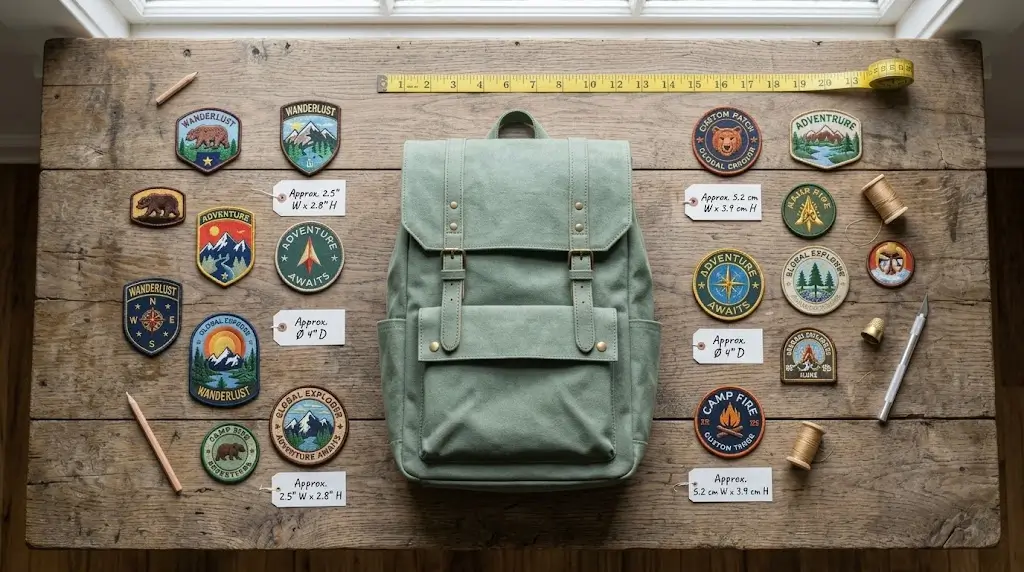
There is no single standard size for backpack patches, as the designs can range from small decorative badges to large statement pieces, depending on the bag and the intended look.
As a general guide, these dimensions can help you start planning:
| Small patches | Around 5–7 cm wide, suitable for initials, small symbols and simple logos |
| Medium patches | 8–10 cm wide, a versatile choice for club emblems and mascots |
| Large patches | Around 11–15 cm wide, better suited to larger front panels |
Always consider both width and height when choosing dimensions.
Here are the additional steps you need to take to find the right size for custom iron-on patches.
- Match the Patch Size to the Backpack
The same patch can look proportionate on one bag and oversized on another. Before ordering, measure the panel where you intend to place it.
- A compact daypack can have limited space between the seams and zips, which makes a small and medium patch a more practical option
- A larger school backpack can usually accommodate a broader design
- Whereas hiking and travel bags may have several attachment areas with different dimensions
As a starting point, leave a visible margin around the patch rather than filling the entire panel. This creates a cleaner appearance and reduces the risk of the design interfering with pockets, straps or fastenings.
Remember that padded panels and curved surfaces can affect how a patch sits. If possible, measure the bag while it is in its usual shape rather than stretched flat.
2 . Choose Dimensions Based on the Design
The amount of detail in your artwork should influence the patch size.
- Simple symbols and short initials can remain recognisable on a small patch
- Whereas detailed illustrations often need more room
For example, a school logo containing a small crest and multiple words can be difficult to read at 5 cm wide. Increasing the width could improve legibility, although simplifying the artwork may produce an even better result.
Lettering deserves an area of your attention as well. If the patch includes a club name, slogan or team motto, make sure the text remains clear at the final size. Thin outlines and tiny gaps between design elements may also disappear during production, particularly with embroidered patches.
Ask for a digital proof at the intended dimensions before approving the design. A large image on a computer screen can make details appear much clearer than they will be on the finished patch.
3 . Consider the Patch Shape
Width and height are only part of the decision, as the shape affects how much space a design occupies and where it fits best. To bring your creative vision on backpacks with iron-on patches, you need to remember that:
- Round patches work well for simple emblems and compact logos
- Shield-shaped designs suit team crests and traditional badges
- Rectangular patches provide room for names, slogans and longer text
Custom-shaped patches can follow the outline of a mascot and illustration. But complex edges may require more careful production and can look crowded when the design is too small.
For a balanced result, consider the overall silhouette rather than measuring width alone. A tall shield measuring 8 cm high may occupy a very different amount of space from a circular patch with an 8 cm diameter.
4 . Think About Patch Placement
The location of your patch can also determine its ideal dimensions.
- Front Panel
Medium or large patches can work well, provided they do not overlap seams, pockets or zips.
- Front Pocket
Smaller designs are usually easier to position neatly on this narrower area.
- Side Panel
Compact patches are often more practical because the available space may be limited.
- Shoulder straps
Small, lightweight patches are generally preferable to avoid bulk or discomfort.
- Dedicated Patch Panels
Measure the usable area and leave enough room for the attachment system.
If the backpack has a hook-and-loop panel, check the dimensions of that panel rather than the entire bag. A patch that extends beyond the fastening area may not attach securely.
5 . Select a Size That Suits the Attachment Method
The attachment method can affect which dimensions are practical, so here is what you need to know about the three of them.
- Sew-on Patches
Sew-on patches can be fitted to many fabric backpacks, but the stitching needs enough room around the edges. Very large patches may also require more time and care to attach evenly.
- Iron-on Patches
Iron on patches are a great choice for compatible fabrics and can be difficult to apply to curved backpack panels evenly. You should check the manufacturer’s instructions before using heat, especially on synthetic materials.
- Hook-and-loop Patches
Hook-and-loop patches work well for interchangeable designs, especially on bags that have fastening panels. You need to make sure the backing matches the panel and that the patch does not move beyond the area that provides a secure hold.
Don’t forget to consider the weight and flexibility for larger patches, as a heavy design can struggle to sit comfortably on a lightweight bag.
6 . Test the Size Before Placing a Bulk Order
Test the dimensions before purchasing a large quantity if you are ordering patches for a school, sports club, business or group,
- Cut a paper template to the proposed size and place it on the backpack.
- Check how it looks from a distance, whether the design feels balanced and whether it obstructs any functional features.
This simple test can help you compare two or three sizes without committing to production. Confirm the finished width and height, backing type, border and artwork details with the supplier for custom orders. Also review a sample before approving the full batch if it is possible.
Common Queries Answered About The Size Of Backpack Patches
-
Can a backpack patch be too large?
Yes. A patch that covers most of the available panel can interfere with pockets and zips. This is why you should leave a visible margin and consider the bag’s proportions before settling on the dimensions.
-
What size works best for a school backpack?
A patch around 8–10 cm wide is a useful starting point for many school backpacks, but the best fit depends on the panel and design. Measure the available space before ordering.
-
Should I measure a round patch differently?
Yes, because round patches are usually specified by diameter, while rectangular and other shaped patches are measured by width and height. You should confirm both measurements with your supplier if needed.
Final Word
The best backpack patch size for you can be the one that suits the bag with its readability and also leaves enough room for everyday use. Small patches work well for simple symbols, while medium and large designs can accommodate more detailed logos or make a stronger visual statement. So always measure the intended area, check the attachment method and test a template before ordering. A little planning can make the difference between a patch that looks awkward and one that feels like a natural part of the backpack.

As a fashion designer at Iron On Patches UK, I help businesses and people create custom iron-on patches. I help them with what I know about designing patches and what materials to use. I also talk about how to apply patches to different things and what’s popular in the patch world. My goal with the Iron-On Patches UK blog is to help people make premium patches that show their unique identity and how these patches can be a part of their brand. The Iron-On Patches UK blog is here to make it easy for people to customise their patches.