
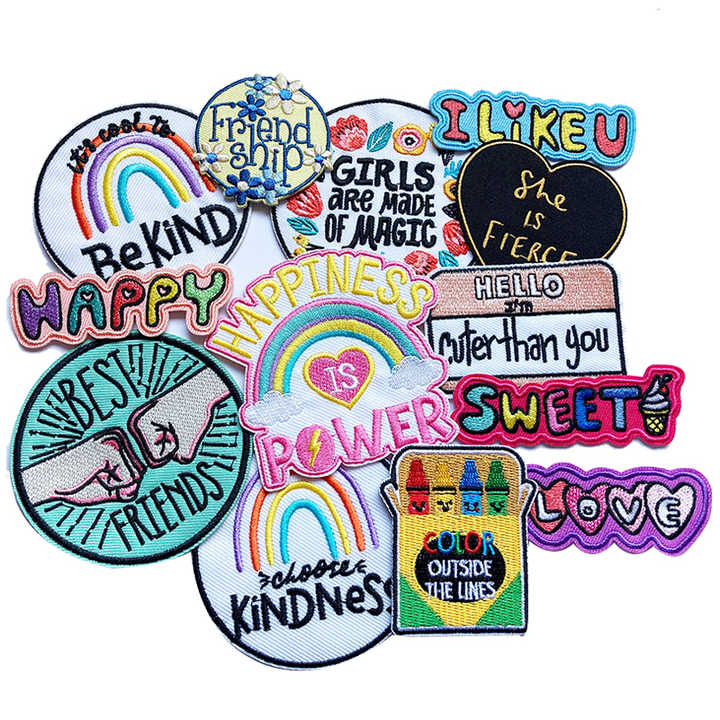
Are Custom Iron-On Patches Worth Buying in Bulk?
Yes, custom iron-on patches are worth buying in bulk if you need the same design more than once. Your artwork has to be digitised before any stitching starts, and that setup cost is paid once per design. A bigger order spreads it across more patches, so each one costs less.
How much you save depends on the quantity and the supplier, since minimum orders and setup fees differ. Below we cover what changes the price, when bulk is not worth it, and how to apply and remove the patches.
Bulk Orders Lower The Per-Piece Cost Of Iron-On Patches
You pay the setup fee once for each design, whatever the quantity. Order more patches and that one fee is shared across all of them.
What the Setup Fee Covers
Before any stitching starts, your artwork has to be digitised into a file the embroidery machine can follow. That work is the same whether you want 20 patches or 500. On a small order, it makes up a big part of each patch’s price. On a large order, it is a small part.
Order At Once To Ensure Consistency In Colours
Patches made in one run use the same thread. A second order placed months later can look slightly different, and the gap shows when old and new patches end up on the same jacket. If you do reorder, ask the supplier whether they keep your digitised file so you don’t pay for it twice.
Size and Detail Decide the Price
A patch is stitched by machine, so the price follows how much thread and stitching time it needs. Size, shape, colours and detail all add to that.
What Adds to the Cost
- Larger patches use more thread and take longer to stitch.
- A custom cut shape costs more than a plain circle or square.
- Every extra thread colour means another thread change.
- Small lettering and thin lines need tighter stitching.
A two-colour round logo will quote lower than a five-colour crest with small text at the same quantity. Iron-on backing adds one production step, but it is small next to the saving from a bigger order.
Ask for Quotes at Different Quantities
Ask the supplier to quote the same design at two or three quantities, such as their lowest, a middle amount and your full order. You will see where the price per patch stops dropping much. Rush orders usually cost more, so ask about timing too.
Skip Bulk If the Design May Change
Patches you never use are wasted money. Hold off on a big order if your logo, sponsor or team name might change soon.
Leftover Stock
A school that updates its crest is left with boxes of old patches and nowhere to put them. A small first run costs a little more per patch but leaves less to throw away.
Some Garments Are Sensitive To Heat
Check the garments first. If you plan to apply iron-on patches to a nylon jacket or a waterproof coat, the heat can damage the fabric. Stretchy tops and structured caps are also poor fits. Sew-on or Velcro backing suits those better. Test one sample patch on a spare garment before you place the full order.
Every Supplier Has A Different Minimum Order Limit
Suppliers set their own minimums and setup fees, so the same order can cost and arrive differently from one to the next. One may ask for a low quantity but charge setup separately. Another may include setup and want a bigger order.
See a Sample First
If you search for custom embroidered iron on patches near me, a local supplier may let you look at finished samples before you commit. You can check the stitching and the backing and talk through the artwork in person. If you order online, ask whether a sample can be posted.
Questions to Ask
- What is the minimum per design?
- Is the digitising fee included or charged on top?
- Will I see a proof before stitching starts?
- How long does a reorder take, and will the colours match?
Poor Application Means Your Money Is Wasted
A cheap batch stops being cheap if the patches start peeling. A bulk order means dozens of garments, so one bad habit gets repeated on every one of them.
How the Glue Bonds
When you apply iron-on patches, the heat melts the adhesive on the back and the pressure pushes it into the fabric. Too little of either and the corners lift. Say a company patches 40 work shirts and presses the first dozen too lightly. Those patches are the ones that come off first. A thin cloth over the patch protects the stitching. Pressing again from the inside of the garment helps the glue grip from behind. The supplier’s heat guidance is the one to follow, since adhesives differ.
Large Batches
A heat press gives more even heat and pressure than a hand iron, which helps when you have a full set of uniforms to do. Items that are washed often, like kids’ school bags or work jackets, hold better with a few stitches around the edge. Pressing one spare garment first shows whether the method works before the rest are done.
Iron-On Patches Come Off Cleanly If You Go Slowly
Patches sometimes have to come off after a rebrand or a wrong-logo batch, and with a bulk order that can mean a lot of garments. To remove iron-on patches without damaging fabric, the heat is the part that matters. Warm the patch until the glue goes soft, then peel it. Pull it cold and the fabric usually tears.
Clear The Leftover Glue Expect a sticky mark where the patch was. A residue remover normally shifts it, but test it on an inside hem first. Go easy with heat on thin or synthetic fabric, and don’t plan on reusing the patch.
Quick Answers To Queries About Bulk Ordering Iron-On Patches
-
How much do custom iron-on patches cost?
The price depends on size, thread colours, detail and quantity. The iron-on backing adds only a small amount per patch, and digitising is usually a one-off fee, so a larger order lowers the price per patch. Ask for a quote at two quantities to see the difference.
-
Should we go for sew-on patches or iron-on patches?
Iron-on patches offer quicker application and suit sturdy fabrics like cotton and denim. Sewing holds better on heavy daily wear and on fabrics that cannot be exposed to heat. Some people use both techniques as it offers enhanced durability when you stitch the patch after ironing it on the garment.
-
How long do iron-on patches last?
It depends on the fabric, how well the patch was applied and how the garment is washed. They hold longest on cotton and denim. Hot washes and high-heat dryers weaken the glue over time, so washing cooler and stitching the edge helps.
-
How long do custom patches take to arrive?
Usually a few weeks from proof approval, though it varies by supplier and design. Proofing, setup, production and delivery each take time, so ask for a delivery date before you order, especially if the patches are for an event.
-
Can I design my own iron-on patches?
Most suppliers let you upload a logo, choose a shape and size, and pick iron-on backing. You can finalise the design which will then be sent for production. Bold lines and simple shapes stitch better than fine detail.
Bulk Works for Repeat Designs
If the same patch will keep going onto shirts, bags or jackets, ordering more at once usually costs less per patch. If the logo may change or the garments can’t take heat, a small run is the safer choice.
Compare the pricing by getting a quote for a regular order in small quantity and a bulk order. If the bigger order only saves a little, you don’t need it. Ask for a sample too, so you can see the stitching before you commit.
As a fashion designer at Iron On Patches UK, I help businesses and people create custom iron-on patches. I help them with what I know about designing patches and what materials to use. I also talk about how to apply patches to different things and what’s popular in the patch world. My goal with the Iron-On Patches UK blog is to help people make premium patches that show their unique identity and how these patches can be a part of their brand. The Iron-On Patches UK blog is here to make it easy for people to customise their patches.